Revoking Wangchuk’s detention opens door for trust and stability in Ladakh
Arun Joshi
- Posted: March 14, 2026
- Updated: 06:44 PM
Arun Joshi / DW Bureau / Jammu
The Union Home Ministry’s decision to revoke the detention of Sonam Wangchuk with immediate effect is in line with the Centre’s commitment to peace, development, and security in one of the most sensitive regions of the country. This decision may also have a long-lasting impact on Kashmir. It reflects the considerate attitude of the Centre toward sensitive border regions and, in particular, for Ladakh it has been hailed as a welcome development. The first to hail the decision was the new Lieutenant Governor, Vinai Kumar Saxena. He described it as a “positive step by the Centre towards fostering an environment of peace, stability and mutual trust in Ladakh.”
This decision has revived hopes of meaningful dialogue between the high-powered committee of the Home Ministry and the stakeholders of the Ladakh region, who have been demanding statehood, Sixth Schedule status, and several other constitutional safeguards for the past more than three years. The revocation of Sonam Wangchuk’s detention under the National Security Act (NSA) is being seen as opening the door afresh for dialogue and reconciliation on these issues.
This became clear in the announcement made by the Ministry of Home Affairs. While reiterating its commitment to fostering an environment of peace, stability and mutual trust in Ladakh so as to facilitate constructive and meaningful dialogue with all stakeholders, the government said it had “decided to revoke the detention of Sonam Wangchuk with immediate effect by exercising the powers available under the National Security Act (NSA).” At the same time, it emphasized that dialogue would receive top priority.
It was in the backdrop of a serious law and order situation that arose in the peace-loving town of Leh on September 24, 2025, that Sonam Wangchuk was detained on September 26, 2025 under the provisions of the National Security Act, pursuant to an order issued by the District Magistrate, Leh, with a view to maintaining public order. “Sonam Wangchuk has already undergone nearly half of the period of detention under the Act,” the government stated while justifying the revocation of the detention under the NSA at this point in time.
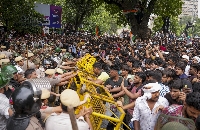
A look back at the September 24, 2025 incidents reveals that Leh town had witnessed unprecedented violence, in which police and a large group of youth protesting against the deteriorating health condition of two elderly persons sitting on a hunger strike clashed. This resulted in the killing of four youth and several others were injured. This was the kind of incident Leh had never witnessed before. It also became a subject of mutual blame.
The government accused the protestors of taking the law into their hands and making murderous attempts on the lives of policemen guarding vital installations, including the police station and the BJP office. The protestors, on the other hand, accused the law and order machinery of firing at them, killing four people and injuring more than 160 others.Sonam Wangchuk, who was leading the protest hunger strike demanding statehood and constitutional safeguards for the Ladakh region, was accused of inciting the youth to resort to violence. His speeches, the administration stated, were provocative and asked the youth to stage Nepal-like protests to topple the system. He was detained on September 26, 2025 and shifted to Jodhpur jail.
The whole issue rests on the status of Union Territory for Ladakh. Initially, Buddhists in Ladakh celebrated the grant of this status when it was announced on August 5, 2019, almost simultaneously with the abrogation of Article 370 and Article 35A that ended the special rights and privileges of Jammu and Kashmir. However, later when the people realized that the status would be nothing more than a Chandigarh-type Union Territory with no political empowerment and no Assembly, apprehensions developed that this could open the doors for outsiders and dilute their culture and rights over land.
Union Home Minister Amit Shah had repeatedly assured that the Government of India would protect all the rights and privileges of the people in matters of jobs and land. He also paved the way for dialogue with the stakeholders — the Leh Apex Body and the Kargil Democratic Alliance — to cement these assurances. However, during the course of dialogue the demands kept multiplying and a whispering campaign against the government gathered ground. This created space for unrest in the region, which ultimately culminated in the violence of September 24, 2025.
Now the Government of India appears keen to set at rest all doubts in the minds of the agitated people and has taken a significant initiative to invest in peace and stability in the region. It does not want any anxiety in the region because of misplaced ideas. That is why it has linked the release of Sonam Wangchuk with the process of dialogue and peace. This particular decision has to be understood in the context of the overall approach of the Government of India. In part, it acknowledges the sensitivities of the region and also opens a broader roadmap for the development and security of the region and its people. It is in line with its commitment to remove all irritants, however small they might be, in order to create an environment of lasting peace.
The decision also shows that the Government of India is considerate when it comes to meeting the concerns of people, especially when these arise in sensitive border areas. Ladakh is a hyper-sensitive region, sharing borders with China, Pakistan and Pakistan-occupied Kashmir, and is also home to the world’s highest battlefield. What today’s decision reflects is that the Government of India is not sitting on prestige. For it, the aspirations of the people and the strategic importance of the region are more important than anything else. The move will also help assuage the feelings of those who were hurt by the detention of Sonam Wangchuk and had made his release one of the talking points during their discussions with the Home Ministry on issues concerning the Ladakh region.



.gif)